When Court Surfaces Shift: Effects on Point Spread Calculations in Tennis and Basketball
Quinn Friedrich · Aug 21, 2026
When Court Surfaces Shift: Effects on Point Spread Calculations in Tennis and Basketball
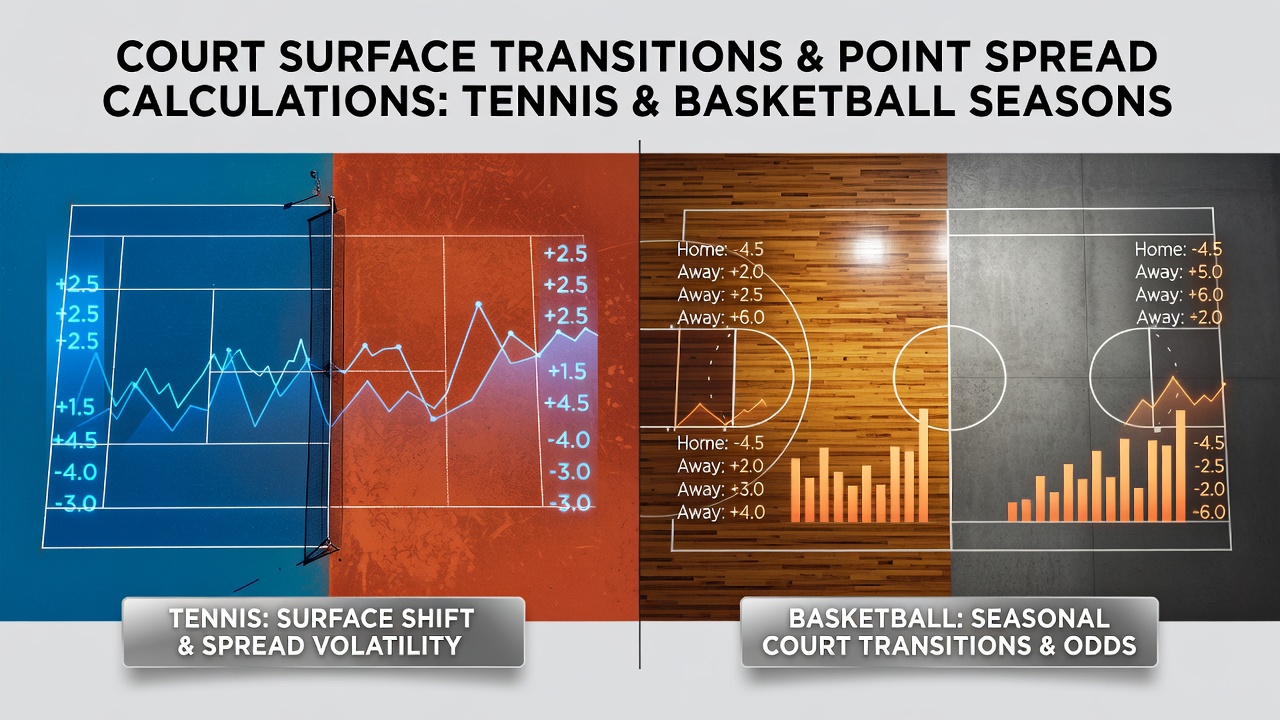
Professional tennis circuits move through distinct surface phases each year while basketball leagues maintain indoor hardwood standards that still vary by venue construction and maintenance practices, and these differences prompt adjustments in point spread calculations used by betting operators. Data from major tours indicate that surface changes alter rally lengths, error rates, and scoring margins in measurable ways, which in turn influences how oddsmakers set lines for upcoming fixtures.
Tennis Surface Cycles and Performance Metrics
Grand Slam events rotate between grass, clay, and hard courts across the calendar, and ATP and WTA statistical databases record consistent shifts in average points per game and break percentages when players switch surfaces mid-season. Clay courts slow ball speed and increase bounce height, which extends rallies and reduces the effectiveness of big servers, whereas grass courts produce lower bounces that favor players with flat, aggressive groundstrokes. Hard courts occupy a middle range, yet even among hard-court tournaments the coefficient of friction can differ by several percentage points depending on the manufacturer and climate conditions at each site.
Bookmakers track these patterns through historical datasets and update spreads several days before tournaments begin. In August 2026, the transition from European clay events to North American hard-court swings produced documented changes in set-win probabilities for several top-ranked players, prompting lines to move by one to two games in early-round matches. Observers note that players with strong clay records often see their spreads widen on the first hard-court stops because recovery time between surfaces is limited during the summer schedule.
Basketball Court Variations Across Leagues
Basketball surfaces remain standardized within each league, yet arena-specific factors such as floor age, wood type, and subfloor construction create measurable differences in ball bounce and player traction. NBA teams that travel between older venues with traditional maple flooring and newer arenas with synthetic overlays encounter slight variations in grip and rebound consistency that affect shooting percentages and turnover rates. College basketball schedules introduce additional variables when teams move between conference arenas with different maintenance protocols and between indoor and temporary outdoor setups during exhibition periods.
Statistical models used by sportsbooks incorporate these venue profiles when calculating spreads for road teams. Research from university sports performance labs shows that teams accustomed to one floor type post lower field-goal percentages on unfamiliar surfaces during the first half of games, and oddsmakers adjust totals and spreads accordingly for the opening quarters. These adjustments appear most pronounced in back-to-back road games where recovery windows are short.
Integration Into Spread Calculations
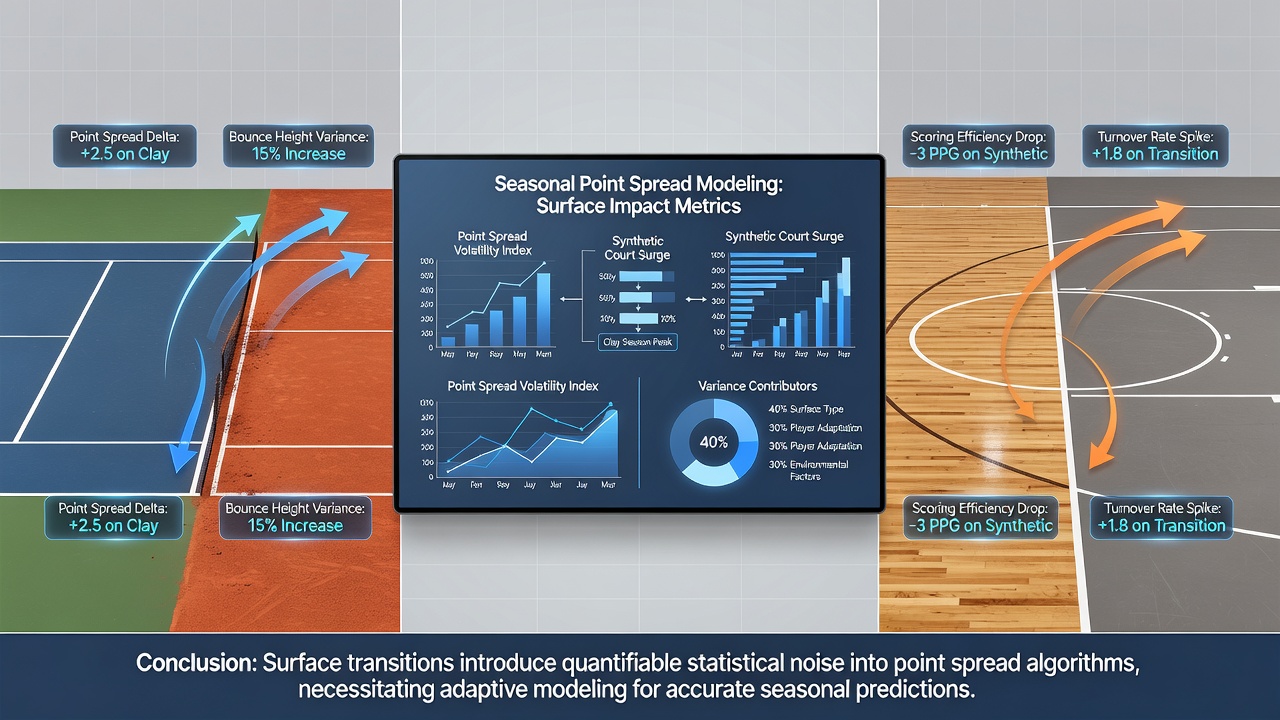
Betting operators combine surface data with travel logs, rest days, and recent performance splits to generate point spreads. In tennis, models weight surface-specific win rates for each player against the opponent’s historical results on the same material, then apply a margin of error that widens during transition weeks. Basketball models apply similar logic at the team level, factoring in how often a squad has practiced on the destination floor type and how that correlates with defensive efficiency numbers.
Regulatory reports from the Nevada Gaming Control Board document that handle on tennis and basketball spreads fluctuates during surface-transition periods, with sharp bettors concentrating wagers on matches where models detect underpriced adjustments. Industry analyses from the Australian Gambling Research Centre indicate parallel patterns in international markets where operators publish updated lines after each major surface change in tennis and after notable arena renovations in basketball.
Examples From Recent Seasons
One study of ATP matches across 2024 and 2025 revealed that players moving from clay to grass within seven days experienced a 12 percent drop in first-serve win percentage on average, and spreads reflected this shift within 48 hours of the schedule release. In basketball, a 2025 analysis of NBA road games showed that teams playing on a new synthetic floor installation posted 3.8 percent fewer points in the paint during the first two quarters, prompting modest spread movements in the affected contests.
Those who monitor line movement note that these corrections occur faster in tennis because surface changes are announced months in advance, whereas basketball adjustments often follow last-minute venue updates or maintenance reports. The ball remains in the court of data providers who supply real-time surface metrics to oddsmakers throughout both seasons.
Conclusion
Court surface transitions continue to supply quantifiable inputs for point spread models in both tennis and basketball, and operators refine their calculations each time the calendar moves between surfaces or venues. Historical performance data, combined with venue-specific measurements, allow for systematic adjustments that reflect observed changes in scoring and efficiency. As schedules evolve through 2026 and beyond, these inputs remain central to how spreads are constructed ahead of individual events.