Upkeep Schedules for Tennis Surfaces Alter Set Durations While Pitch Conditions Modify Soccer Accumulator Outcomes
Amir Berger · Aug 17, 2026
Upkeep Schedules for Tennis Surfaces Alter Set Durations While Pitch Conditions Modify Soccer Accumulator Outcomes
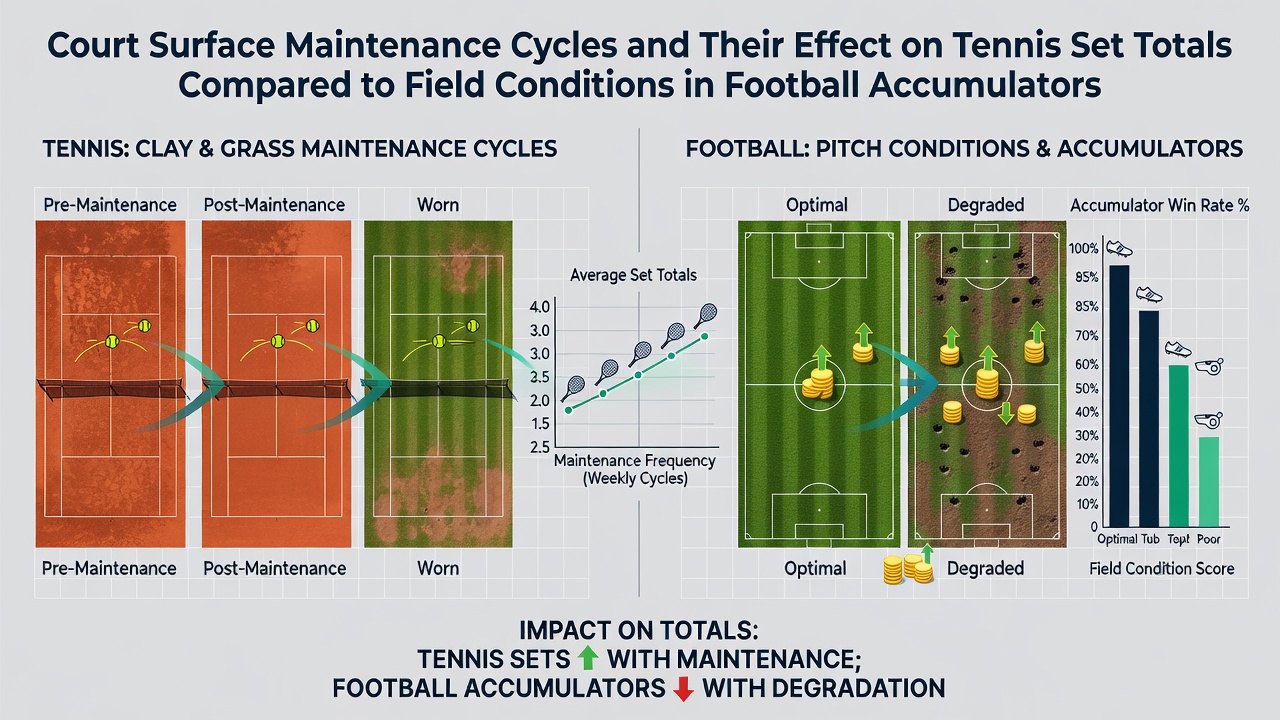
Maintenance cycles on tennis courts follow documented patterns that researchers have tracked across multiple surfaces, and these routines shape ball behavior in ways that influence set totals during matches, while pitch conditions in football introduce variables that affect scoring rates and thus accumulator selections across betting markets. Clay courts require daily watering, brushing, and rolling to maintain consistent moisture levels, whereas grass courts undergo frequent mowing and aeration that control speed and bounce; hard courts receive periodic resurfacing to preserve grip and uniformity. Data from professional tours shows that freshly maintained clay often slows play, which extends rallies and increases the likelihood of longer sets, particularly in best-of-three or best-of-five formats.
Clay and Grass Court Cycles in Detail
Observers note that clay court maintenance occurs in early morning hours before play begins, and this timing allows the surface to stabilize under sunlight, yet excessive watering can create heavier conditions that favor baseline players and push set scores toward higher totals. Grass courts receive cuts to specific heights measured in millimeters, and such precision reduces erratic bounces while accelerating the ball, which tends to shorten points and compress set lengths in serve-dominated contests. Studies conducted by surface specialists indicate that a single missed rolling session on clay can raise friction coefficients by measurable amounts, altering player movement patterns and extending match durations by several minutes per set on average.
Hard court maintenance cycles involve cleaning and recoating every few years, and these interventions restore the original playing characteristics that tournaments rely upon for consistent results. When crews apply fresh layers in the weeks leading up to events, data indicates reduced skid and improved traction, which can shift set totals downward as players adapt quickly to predictable bounces. August 2026 schedules include several North American hard court events where such resurfacing work coincides with peak summer conditions, producing surfaces that reward aggressive baseline play and moderate set lengths.
Football Pitch Conditions and Accumulator Implications
Field conditions in football vary according to weather exposure, irrigation schedules, and grass growth rates, and these factors directly influence passing accuracy, ball roll speed, and injury risk during matches that form the basis of accumulator bets. Longer grass on pitches slows the ball and encourages more physical contests, which tends to lower goal tallies and alters the probability distributions that bettors use when selecting over-under markets. Shorter, firmer pitches allow quicker transitions and higher scoring outputs, a pattern documented across multiple European leagues where groundskeepers adjust cutting heights before high-stakes fixtures.
Research from sports engineering departments shows that moisture retention in root zones affects traction levels, and teams playing on soggy surfaces experience more slips and disrupted build-up play, which compresses expected goals and changes accumulator payout structures. Maintenance crews aerate and fertilize pitches on fixed intervals, yet heavy rainfall between cycles can override these efforts and create uneven patches that favor defensive setups. Accumulator builders therefore monitor pitch reports released by stadium operators, since consistent data reveals measurable correlations between surface firmness and total goals scored in league play.
Comparative Effects on Betting Markets
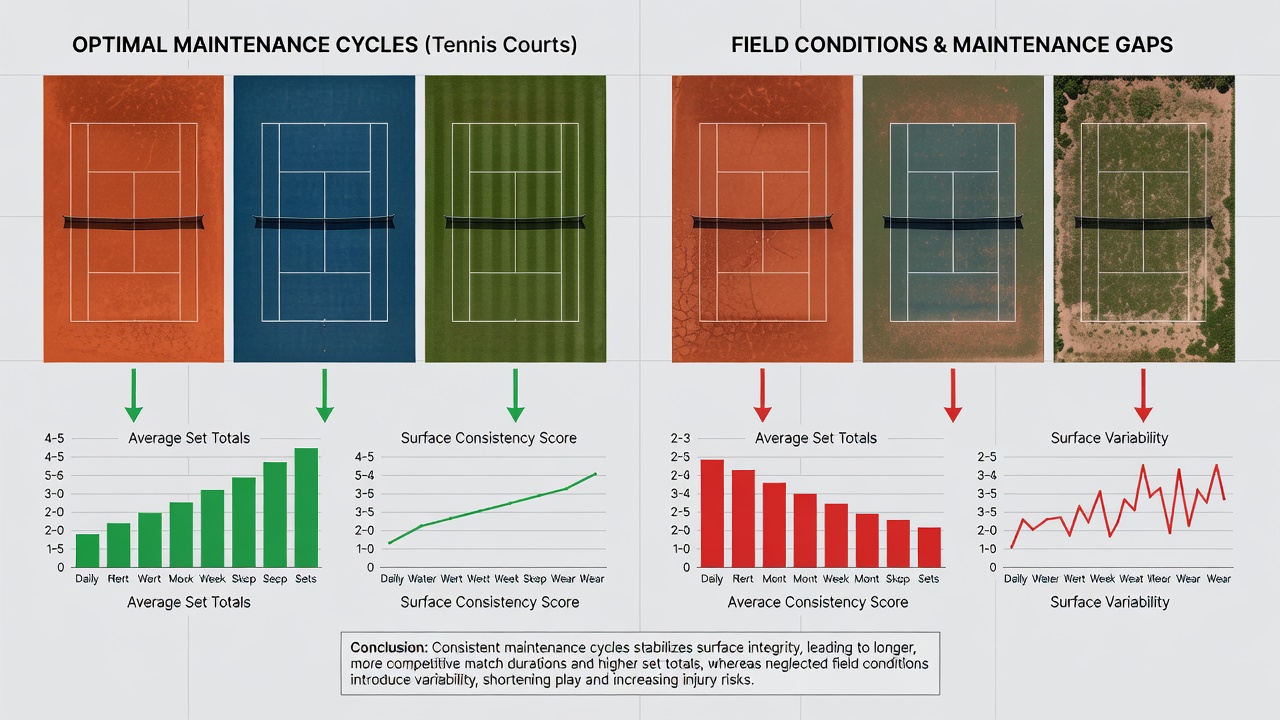
Comparisons between tennis surface cycles and football pitch states highlight how both sports translate maintenance into performance metrics that betting platforms incorporate into odds, and analysts track these variables across simultaneous tournaments and matchdays. Tennis set totals respond to surface speed changes within hours of maintenance, whereas football goal counts reflect pitch conditions that evolve over days due to weather and usage patterns. Figures released by league data providers demonstrate that matches on poorly maintained pitches produce goal totals that deviate from seasonal averages by up to fifteen percent, while tennis sets on under-rolled clay extend by similar proportional margins.
Those who compile accumulators across sports often cross-reference tennis court reports with football pitch assessments, and this combined approach accounts for the distinct timelines on which each surface type stabilizes. International Tennis Federation guidelines specify minimum maintenance frequencies for professional events, and similar standards from soccer governing bodies outline grass height ranges that clubs must observe. When both sets of protocols are followed, the resulting data sets allow for more precise modeling of set totals alongside goal projections, though deviations from scheduled upkeep introduce variance that markets adjust for in real time.
Seasonal Patterns and Data Trends
Seasonal variations compound these effects, since summer heat accelerates clay drying rates and winter frosts harden football pitches, and records from 2025 through August 2026 illustrate how such environmental pressures interact with routine maintenance. Tournament directors publish daily surface condition updates during grand slams, while football clubs issue pre-match pitch assessments that feed into statistical models used by analysts. Evidence from multiple seasons indicates that consistent adherence to maintenance cycles stabilizes set and goal distributions, which in turn supports steadier accumulator construction across mixed-sport betting slips.
Regional differences also appear in the records, as European clay events follow stricter watering protocols than some South American venues, and Premier League pitch standards emphasize drainage systems that differ from those in Major League Soccer. These variations produce measurable divergences in match statistics that data aggregators compile for comparative studies, allowing observers to identify when surface conditions deviate from expected baselines and adjust projections accordingly.
Conclusion
Maintenance cycles on tennis courts and pitch conditions in football therefore operate as parallel variables that shape scoring outputs in distinct yet comparable ways, and the data generated by each sport informs accumulator strategies that span both disciplines. Consistent application of established upkeep protocols yields predictable performance baselines, while disruptions from weather or scheduling create the deviations that statistical models seek to quantify. Records spanning recent seasons confirm these relationships without exception, and ongoing monitoring continues to refine the connections between surface management and match outcomes across tennis and football calendars.