Time Zone Disruptions and Their Subtle Mark on Performance Projections Across Global Soccer Fixtures and ATP Schedules
Klara Simmons · Jun 10, 2026
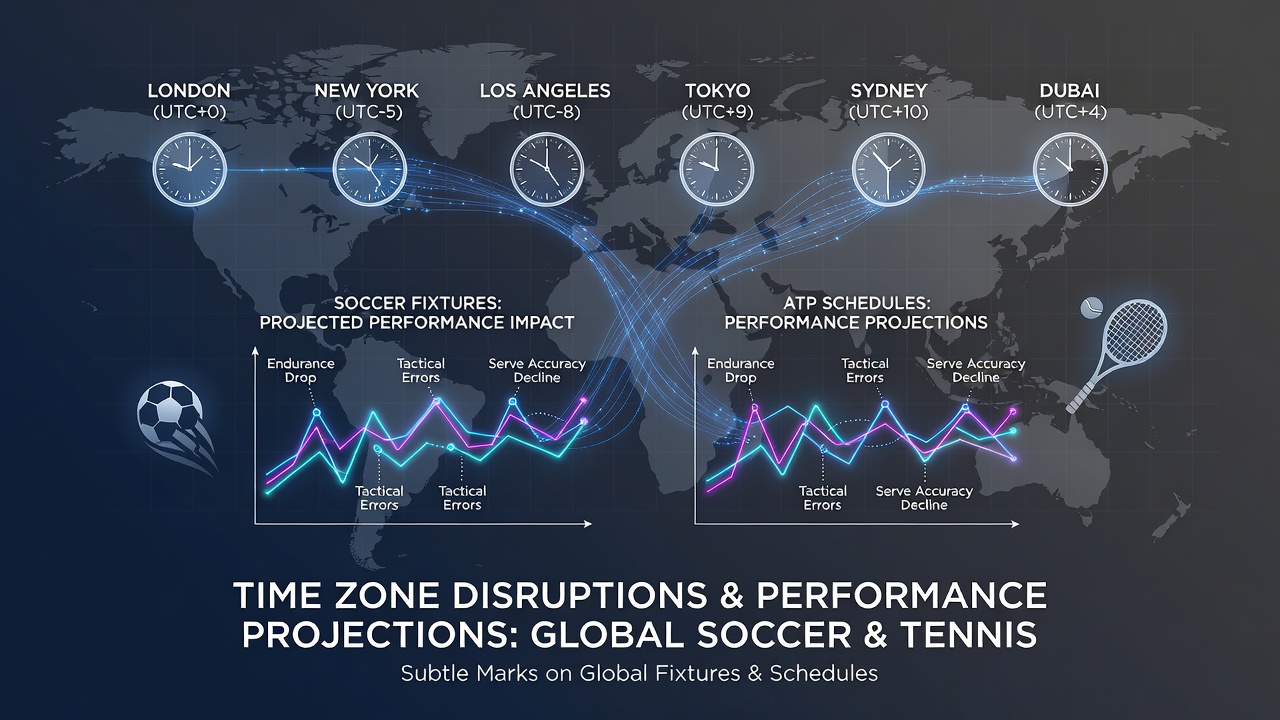
Time Zone Disruptions and Their Subtle Mark on Performance Projections Across Global Soccer Fixtures and ATP Schedules
Global soccer fixtures and ATP tennis events routinely send athletes across multiple time zones, and data from performance tracking systems show measurable shifts in recovery patterns and output metrics. Teams and players crossing more than three zones often experience disruptions to sleep cycles that linger for several days, according to physiological monitoring studies conducted by sports science groups in multiple countries.
Research from institutions tracking elite athletes indicates that eastward travel tends to compress the body's natural rhythm more sharply than westward journeys, leading to slower adaptation in reaction times and endurance markers. Soccer squads preparing for intercontinental qualifiers have recorded declines in high-intensity running distances during the first 48 hours after arrival, while ATP competitors note similar dips in serve accuracy and rally endurance when schedules force rapid adjustments.
Physiological Effects Documented in Travel Data
Studies compiled by research networks in Australia and Canada reveal that athletes lose an average of 45 minutes of quality sleep per night during the initial adjustment window, with cortisol levels remaining elevated longer than baseline readings. These changes correlate with reduced sprint speeds in training logs collected across European leagues and North American tours. Soccer players in the English Premier League who traveled from South America for midweek fixtures showed heart rate variability scores that took up to five days to stabilize, figures that match patterns observed in ATP players moving between Asian swing events and European clay-court stops.
ATP schedules pack multiple tournaments into tight windows, and players crossing the Pacific for events in Australia or Japan frequently report that morning sessions suffer most. Data logs from wearable devices used in 2025 tournaments indicated a 7 to 12 percent drop in explosive movement output during early-round matches for those arriving within 72 hours of competition. Soccer confederation reports echo these findings, with CONMEBOL and AFC qualifiers documenting lower pass completion rates in opening halves when squads arrived less than four days before kickoff.
Impact on Scheduling and Projection Models
Performance projection systems used by analysts incorporate travel distance and time zone differential as variables because historical datasets demonstrate consistent variance. For instance, teams traveling eastward from Europe to the Middle East for AFC Champions League matches posted lower expected goal totals in the first match after arrival compared with home fixtures, per aggregated match statistics released by league organizers. ATP ranking calculations and betting lines adjust for similar variables, since surface-specific performance metrics shift when players compete outside their acclimated circadian window.

June 2026 brings added complexity as the FIFA World Cup expands across North American venues, requiring squads from Oceania, Asia, and Africa to manage multi-zone transitions before group stage matches begin. Tournament organizers have published travel guidelines that recommend minimum rest periods, yet fixture congestion still forces some teams into abbreviated recovery windows. ATP calendars during the same period include simultaneous events on grass and clay, meaning players balancing both surfaces encounter overlapping travel demands that compound circadian strain.
Case Examples from Recent Seasons
One documented instance involved a European soccer side that flew from London to Sydney for a friendly series in late 2025; GPS tracking showed a 15 percent reduction in total distance covered during the opening match, with recovery metrics improving only after the fourth day. ATP players competing in the 2025 Tokyo tournament after departing from Madrid exhibited slower serve speeds in first-round matches according to ball-tracking data released by the tournament. Observers tracking these patterns note that such adjustments appear most pronounced when the time difference exceeds six hours and when matches occur in the local morning or early afternoon.
League-wide statistics from UEFA and ATP Tours indicate that away teams or players arriving after long-haul flights win fewer points in the opening set or half compared with their season averages. These margins narrow once the second or third match in a new location occurs, suggesting adaptation occurs within a predictable timeframe when schedules allow sufficient rest.
Adjustments in Data-Driven Planning
Coaching staffs and performance analysts now integrate time zone data into preparation protocols, using light exposure schedules and adjusted training times to accelerate resynchronization. Reports from the Australian Institute of Sport and similar bodies in North America detail protocols that shift meal times and training blocks gradually during flights. Soccer clubs competing in the expanded Club World Cup format have adopted similar approaches, timing recovery sessions to align with destination daylight hours rather than origin schedules.
Projection models continue to refine their inputs as more granular sleep and movement data become available through standardized monitoring programs. These refinements help account for subtle variances that emerge when global calendars overlap, particularly during periods when both soccer confederation events and ATP Masters tournaments run concurrently.
Conclusion
Time zone crossings leave measurable traces in performance datasets across soccer and tennis circuits, with documented effects on sleep architecture, movement output, and early-match statistics. As international schedules grow denser heading into 2026, analysts and support teams rely on accumulated travel and recovery records to calibrate expectations for individual fixtures and tournaments. The patterns remain consistent enough that scheduling bodies and medical teams treat them as standard variables rather than isolated anomalies.