Roster Rebuild Cycles and Their Impact on Line Movements in NBA and Soccer Seasons
Otto Simmons · Jul 8, 2026
Roster Rebuild Cycles and Their Impact on Line Movements in NBA and Soccer Seasons
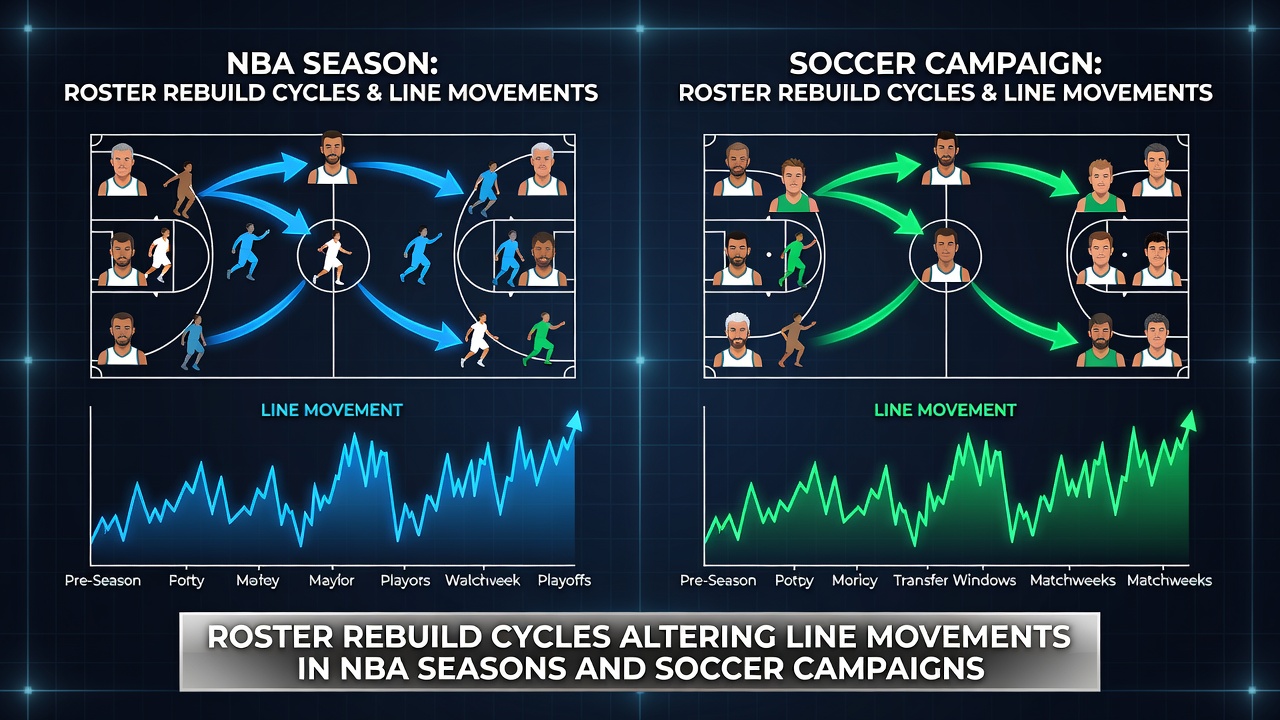
Roster rebuild cycles create measurable shifts in betting lines across NBA seasons and soccer campaigns, as teams trade veterans for draft picks or young talent while adjusting salary structures that influence projected win totals. Data from league tracking services shows these cycles typically span two to four years, during which point spreads and totals move in response to roster composition changes rather than immediate performance indicators alone.
Patterns in NBA Rebuild Timelines
NBA franchises entering rebuild phases often see opening night spreads adjust by three to six points compared to the prior season, according to historical betting data compiled through 2025. Teams that traded multiple rotation players for future assets tend to open with inflated totals in early months because opposing defenses face less established lineups, yet those same lines tighten as the season progresses and younger players gain experience. Observers note that July roster moves in 2026, including several high-profile sign-and-trade deals, set the stage for similar adjustments heading into the 2026-27 campaign.
Coaches who inherit rebuilding squads frequently alter rotation minutes early, which data from player tracking systems links directly to variance in team efficiency ratings. When a franchise commits to a full rebuild, betting markets respond by pushing totals lower in road games during the first quarter of the season because travel fatigue compounds with inexperience. Studies of past cycles indicate these patterns repeat across conferences, although Eastern Conference teams show slightly larger line movements on average than Western Conference counterparts.
Soccer Campaign Adjustments During Rebuilds
European soccer clubs undergoing roster overhauls experience parallel line movements in domestic league markets, where goal totals and handicap lines shift based on incoming transfer activity. Clubs that sell established midfielders while promoting academy graduates often see their season opening goal lines drop by 0.4 to 0.8 goals compared to the previous campaign, reflecting reduced scoring projections until chemistry develops. Data indicates these adjustments occur most sharply in the first eight to ten matchweeks before stabilizing.
Rebuilds that span multiple transfer windows create extended periods of line volatility, particularly in cup competitions where squad depth becomes a factor. Teams that rotate heavily during congested schedules produce totals that deviate from season averages, prompting oddsmakers to recalibrate live betting thresholds. Research from performance analytics groups shows that clubs with net negative transfer spending over a two-year window post larger line corrections in away fixtures than those maintaining balanced budgets.
Market Response Mechanisms
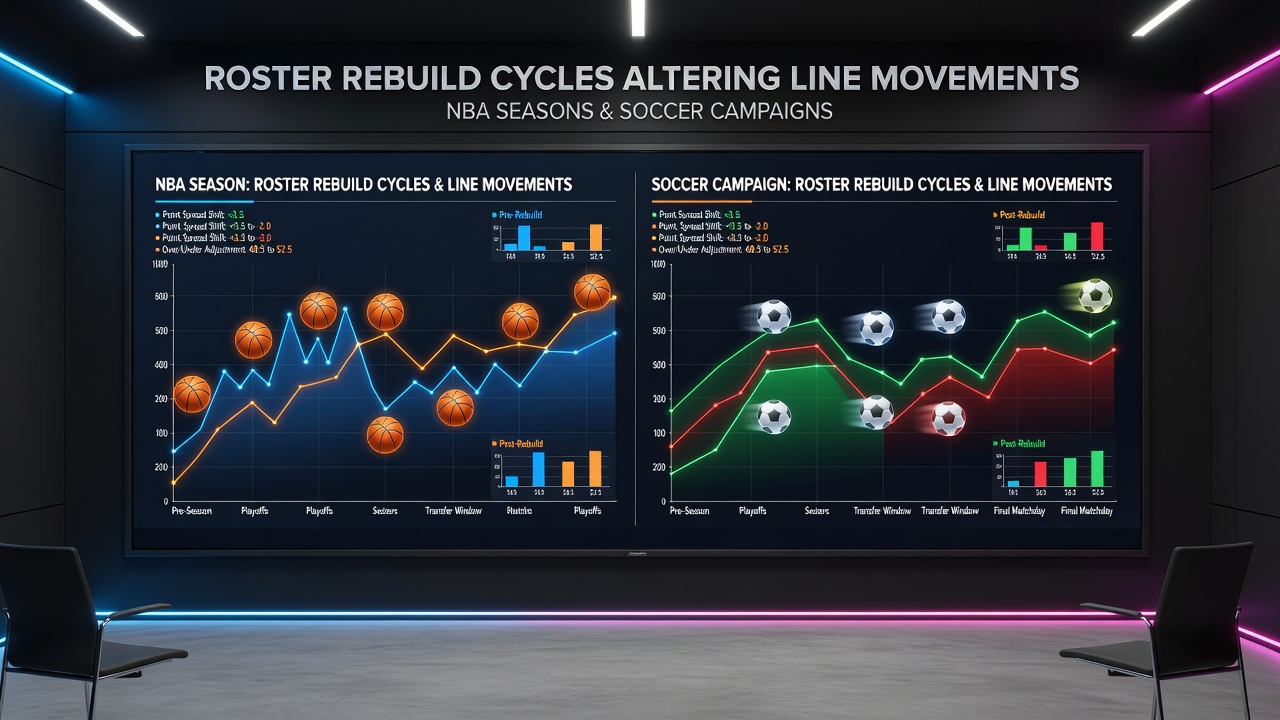
Betting operators adjust lines through algorithms that incorporate roster change data alongside injury reports and schedule strength, producing spreads that move in increments of half-points or quarter-goals. When a franchise announces multiple departures in a single window, early markets often open with conservative totals that later expand as preseason results provide additional inputs. Those who follow line movement reports note that sharp action frequently arrives after the first month of competition once statistical samples emerge.
Cross-league comparisons reveal that NBA point spreads react faster to rebuild announcements than soccer handicap lines because basketball schedules feature more frequent games and thus quicker data accumulation. Soccer campaigns, by contrast, allow markets additional time to assess tactical adaptations before totals settle into narrower ranges. Figures from industry tracking services confirm that rebuild-related line corrections account for roughly 12 percent of total movement volume in both sports during peak rebuild years.
Long-Term Cycle Effects
Rebuild cycles that extend beyond three seasons produce cumulative effects on betting lines, including sustained suppression of totals in early halves of seasons followed by gradual increases as core players mature. Teams that successfully transition from rebuild to contention phases experience the reverse pattern, with spreads tightening and totals rising once veteran additions complement developing talent. Historical records through 2026 demonstrate these oscillations repeat across multiple franchises in both leagues.
Coaching staff continuity during rebuilds further influences line stability, as consistent tactical frameworks reduce variance in game outcomes compared to mid-cycle coaching changes. Data shows that clubs maintaining the same head coach throughout a rebuild post smaller average line movements after the initial adjustment period than those cycling through multiple staffs. Such patterns appear consistently in both NBA regular-season markets and major European soccer leagues.
Conclusion
Roster rebuild cycles generate predictable yet evolving impacts on line movements in NBA seasons and soccer campaigns through roster composition shifts, schedule adjustments, and market recalibrations that occur over multiple windows. Tracking these cycles provides structured insight into how betting lines respond to structural team changes rather than isolated results.