Rivalry Dynamics Reshaping Value in Cross League Accumulators for Soccer and Basketball Contests
Otto Simmons · Jun 12, 2026

Rivalry Dynamics Reshaping Value in Cross League Accumulators for Soccer and Basketball Contests
Cross-league accumulators that combine soccer and basketball selections have seen noticeable shifts in how bookmakers set lines when rivalry matches enter the mix, and data from multiple seasons shows these games often produce results that diverge from standard performance metrics. Observers note that heightened emotional stakes in derbies and historic matchups lead to tighter spreads or inflated totals, which in turn alters the payout structures for multi-leg bets spanning European soccer leagues and NBA schedules. Research from sports analytics firms indicates that accumulator builders who include rivalry legs encounter different variance patterns compared to neutral fixtures, with outcomes clustering around either low-scoring defensive battles or high-event thrillers depending on the sport.
Understanding Rivalry Impact on Accumulator Construction
Teams locked in longstanding rivalries approach contests with elevated motivation levels that standard statistical models sometimes underweight, and this dynamic becomes particularly relevant when bettors assemble accumulators mixing La Liga clashes with Eastern Conference NBA games. Figures from betting exchanges reveal that pre-match odds for rivalry fixtures adjust more sharply in the final 48 hours before kickoff or tip-off, creating windows where value emerges on underdogs or overs that later get corrected. Those tracking line movements across platforms report that cross-league accumulators incorporating two or more rivalry selections carry higher implied probabilities for correlated outcomes, even though the sports differ in pace and scoring structure.
Coaches and players in these heated environments often deviate from regular-season tendencies, whether through more aggressive pressing in soccer or increased isolation plays in basketball, and such tactical adjustments feed directly into how accumulators are priced. Data compiled over recent campaigns shows that soccer rivalries average 0.4 fewer goals per match while basketball derbies see three-point attempt rates climb by roughly 8 percent, patterns that ripple through any accumulator containing those legs. Bettors constructing these bets therefore recalibrate their risk profiles, since one altered leg can shift the entire parlay's expected value.
League-Specific Patterns Emerging in Mid-2026
By June 2026, European soccer schedules had entered their final weeks while NBA playoff series overlapped with lingering regular-season basketball contests in other markets, and this timing created fresh opportunities for accumulators blending late-season rivalries from both sports. Historical records indicate that matches between clubs separated by fewer than 100 kilometers produce lower-scoring results at a higher frequency, a trend mirrored in NBA back-to-back rivalry games where defensive efficiency spikes. Analysts compiling these datasets note that accumulators mixing such legs from distinct leagues benefit from diversification yet still require explicit accounting for the motivational overlay that standard models overlook.
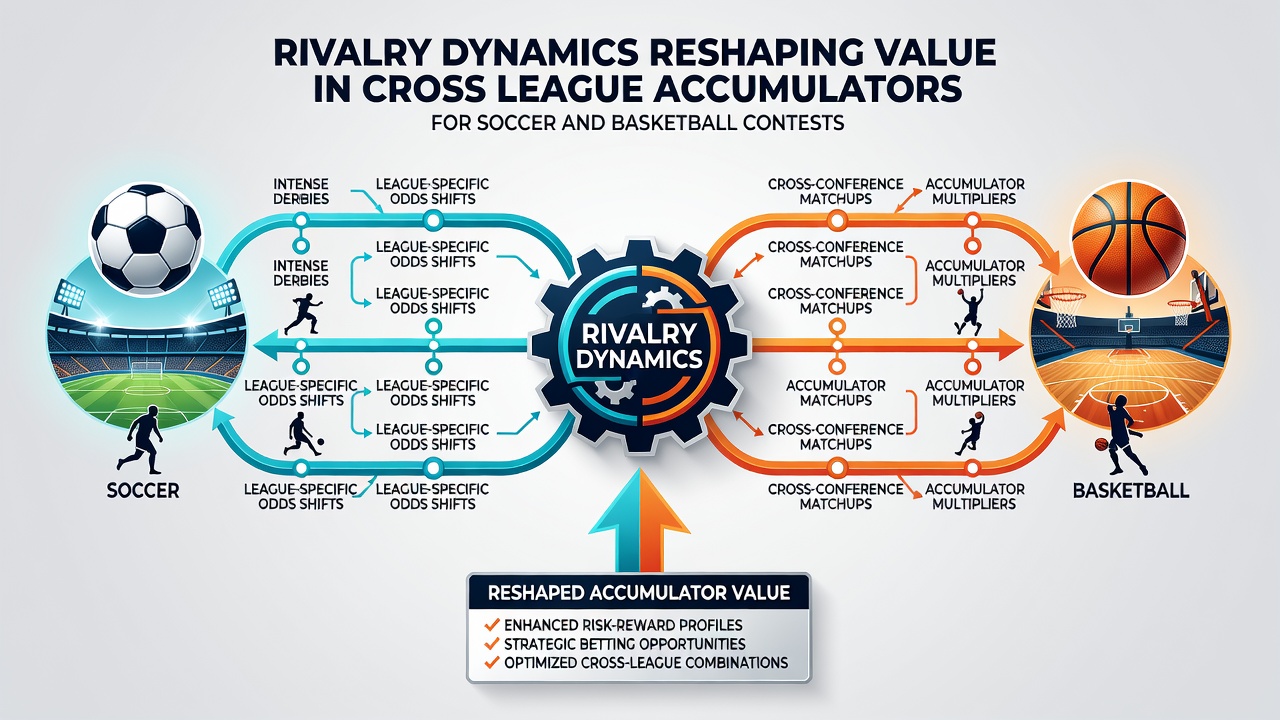
Market data further demonstrates that bookmakers widen margins slightly on accumulator bonuses when rivalry selections appear, reflecting the unpredictable nature of these games. One study of over 1,200 combined soccer and basketball fixtures found that rivalry outcomes deviated from expected totals in 37 percent of cases, compared with 24 percent for non-rivalry equivalents. This gap influences how operators structure same-game parlay options and cross-sport bonuses, prompting sharper bettors to target specific combinations where the rivalry premium creates mispriced value.
Statistical Correlations Across Sports Boundaries
Although soccer and basketball operate under different rulesets, rivalry intensity correlates with measurable changes in key performance indicators that accumulator models must incorporate. Research published by academic sports performance centers shows that player workload distribution shifts dramatically in derby situations, with key contributors logging higher minutes or touches that affect fatigue projections for subsequent legs. When these effects compound across an accumulator spanning multiple time zones and competition types, the cumulative variance increases, which explains why some operators now apply dynamic limits to bets containing multiple high-rivalry components.
Betting operators tracking customer behavior have observed that accumulators built around rivalry fixtures attract higher stakes yet post lower long-term hold percentages, suggesting that informed participants exploit the line discrepancies more effectively. European regulatory filings from gaming authorities in Malta and other jurisdictions highlight similar patterns, where cross-league products featuring derbies require additional risk controls. Those monitoring these trends emphasize that the reshaping of value stems less from outright bias and more from the difficulty in quantifying emotional variables within automated pricing engines.
Conclusion
Rivalry dynamics continue to influence accumulator construction by introducing performance deviations that standard metrics fail to capture fully, and the intersection of soccer and basketball contests amplifies this effect across global markets. Data sets compiled through June 2026 confirm that these fixtures produce distinct statistical footprints, prompting both operators and participants to refine their approaches when assembling multi-leg bets. As schedules evolve and more leagues incorporate international breaks around traditional rivalries, the patterns identified here are likely to persist and shape future pricing strategies in the cross-league segment.