Media Hype Cycles Quietly Tilt Forecasting Models in Soccer, NBA, and Racing Markets
Klara Simmons · Jul 6, 2026
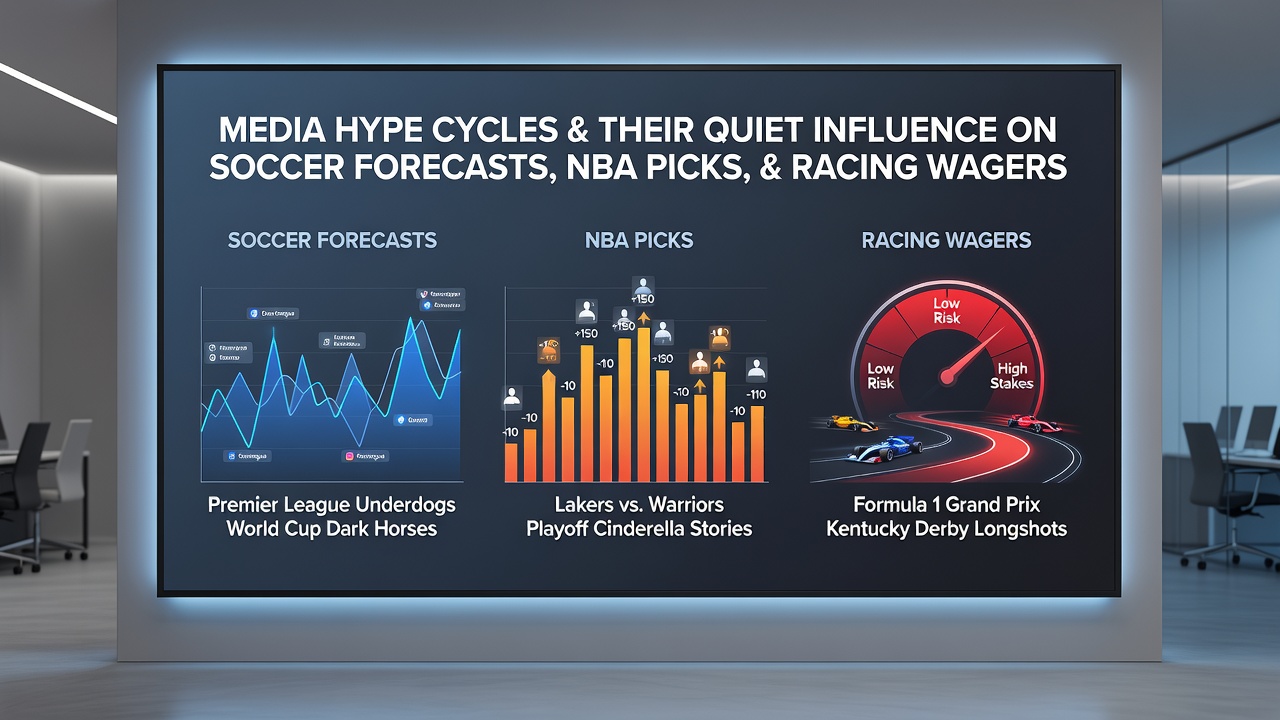
Media Hype Cycles Quietly Tilt Forecasting Models in Soccer, NBA, and Racing Markets
Media hype cycles build through repeated coverage of standout performances, roster moves, and narrative arcs, and these patterns register measurable effects on betting volumes and line movements in soccer, NBA, and racing. Observers tracking oddsmaker adjustments note that spikes in search interest and social mentions often precede shifts in public money allocation, even when underlying statistical indicators remain stable.
Data compiled by the American Gaming Association shows that periods of concentrated national attention on individual teams or athletes correspond with increased handle on those sides, regardless of recent form metrics. In July 2026, several major sportsbooks reported elevated action on squads receiving extended pre-season profiles, while quieter clubs saw steadier but lower volumes aligned more closely with historical averages.
Patterns in Soccer Forecasting
Soccer markets exhibit clear responses when outlets publish extended features on emerging talents or title contenders, because bettors often follow the volume of commentary rather than granular possession or expected-goal differentials. European leagues provide ongoing examples where clubs featured in multi-week documentary series draw disproportionate accumulator inclusions, prompting minor line adjustments from sharp books seeking to balance exposure. Research from academic groups tracking European football data indicates that these narrative-driven inflows can persist for several matchweeks before regression toward mean performance levels occurs.
Analysts reviewing fixture lists around continental tournaments find that teams with prominent broadcast schedules experience temporary overvaluation in totals markets, while midweek domestic games for the same sides attract less distorted pricing. This separation allows model builders to isolate hype effects from travel and rest variables that appear in separate studies of schedule congestion.
NBA Picks and Narrative Amplification
NBA betting lines move in response to storylines around star availability and conference positioning, with media repetition accelerating public side selection on popular franchises. Figures from state regulatory filings reveal that nationally televised games produce handle increases of 30 to 50 percent above comparable off-network contests, and those increases frequently favor the higher-profile roster even when closing totals align with season-long efficiency ratings. Modelers adjusting for this effect often apply separate multipliers when constructing projections for nationally covered series versus regional matchups.
Back-to-back scheduling and load management announcements receive extensive discussion, yet the same outlets rarely quantify their statistical weight, which leaves room for narrative momentum to influence spread and player-prop markets beyond what injury reports alone would justify. Those tracking closing line value across an entire season observe that discrepancies shrink once the hype window closes and betting activity returns to baseline patterns.
Racing Wagers and Selective Coverage
Horse racing markets demonstrate similar dynamics when major outlets focus on a single contender ahead of graded stakes events, because casual participants often anchor selections to the volume of televised analysis rather than pace figures or trainer statistics. Handle reports from tracks hosting marquee summer meets show spikes in exotic wagering on featured runners that exceed corresponding increases in overall attendance or simulcast traffic. Industry data compiled by the Association of Racing Commissioners International indicates these concentrated bets can temporarily compress odds on the hyped animal while lengthening payouts on less-discussed entrants that hold comparable speed ratings.

Trainers and owners who maintain consistent media presence throughout a campaign encounter steadier support from the betting public, whereas horses with quieter profiles require stronger underlying metrics to attract equivalent action. This divergence becomes most visible in multi-race wagers where one or two heavily promoted selections anchor otherwise balanced tickets.
Adjustments in Forecasting Practice
Quantitative groups incorporate media sentiment indicators into their pipelines by monitoring mention frequency and tone across broadcast and digital platforms, then applying dampening coefficients to public betting percentages. These corrections help isolate genuine performance signals from transient attention effects, particularly during periods when multiple sports overlap in the news cycle. Regulatory filings from Canadian provincial gaming authorities and Australian state commissions both document the value of such filters when reviewing market integrity and operator risk management.
Season-long comparisons demonstrate that forecasts incorporating media-volume adjustments reduce variance in projected versus actual closing lines across soccer, basketball, and racing. The improvement appears most pronounced in high-attention windows such as international breaks or playoff qualification stretches, where narrative volume peaks.
Conclusion
Media hype cycles continue to register measurable influence on how bettors allocate capital across soccer forecasts, NBA picks, and racing wagers, because attention patterns shape participation rates even when core statistical indicators remain unchanged. Operators and model developers track these flows through volume data and sentiment metrics, allowing them to maintain pricing discipline while public interest fluctuates. Ongoing monitoring of coverage intensity provides one practical method for distinguishing temporary narrative effects from durable performance trends.