Following the Money Trail: Identifying Major Wager Movements in Soccer, Professional Basketball, and Racing Circuits
Klara Simmons · Sep 4, 2026
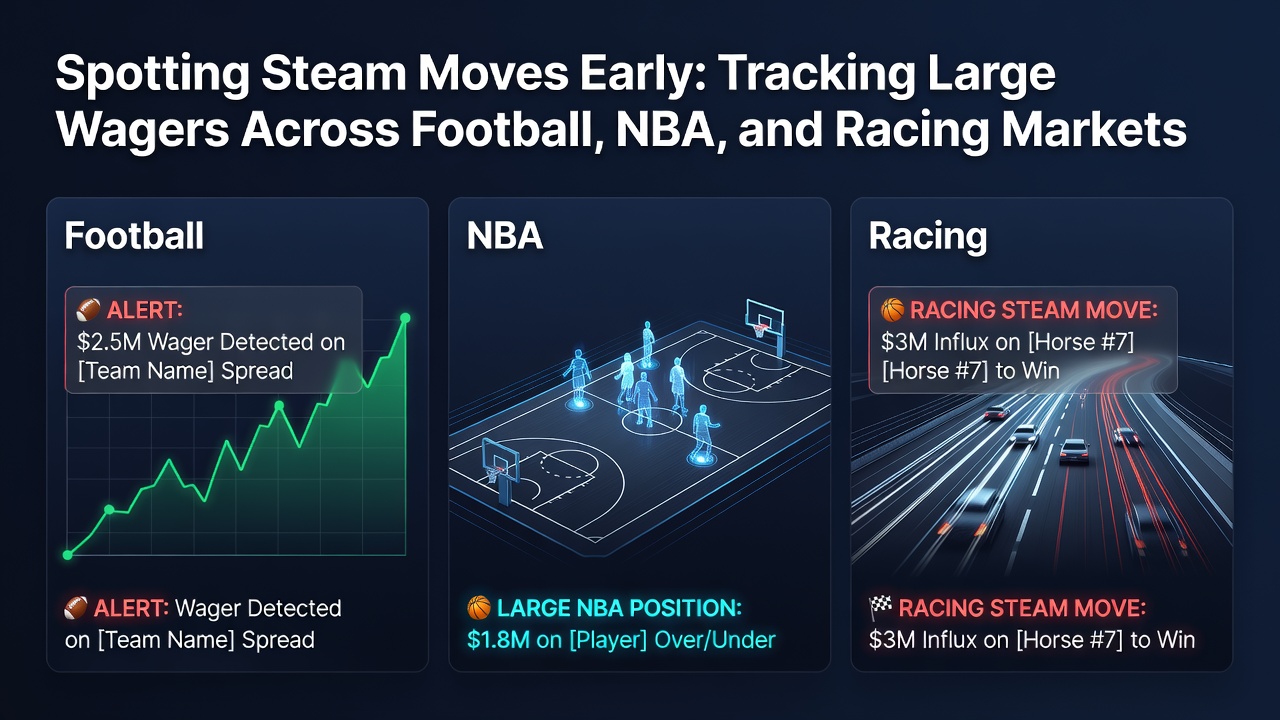
Following the Money Trail: Identifying Major Wager Movements in Soccer, Professional Basketball, and Racing Circuits
Steam moves occur when large wagers from sharp bettors hit the market and shift betting lines before the public catches on, and observers note that tracking these patterns requires attention to volume spikes, line velocity, and timing across football, NBA, and racing. Data from major sportsbooks shows that such activity often surfaces first in offshore or international exchanges before appearing in regulated U.S. markets, where operators adjust odds in real time to balance exposure.
Core Mechanics Behind Early Detection
Line movement alone does not confirm steam, yet when combined with sudden increases in handle and consistent directional pressure across multiple books, patterns emerge that point to coordinated large bets. Researchers at sports data firms have documented that football markets, particularly European leagues, exhibit these signals during midweek fixtures when liquidity is thinner and sharp action can move totals or Asian handicaps by multiple increments within minutes. In contrast, NBA games generate steam more frequently around player props and first-half lines because bettors exploit known trends in usage rates and pace, while racing markets see heavy late money on exotic wagers such as exactas and trifectas when syndicates place bets minutes before post time.
Operators monitor several indicators simultaneously: the ratio of bets to dollars wagered, the speed of line adjustment, and cross-market correlation. When a single side absorbs disproportionate volume without corresponding public interest, syndicates often stand behind the action. According to reports from the Nevada Gaming Control Board, similar volume clusters appeared in basketball during the 2025-2026 season, where certain high-profile matchups saw limits raised and then lowered within the same afternoon as sharp money arrived in waves.
Application Across Football Markets
Football presents unique challenges because of the global nature of the sport and varying liquidity levels between top leagues and lower divisions. Sharp bettors frequently target over/under goals in matches involving teams with distinct stylistic tendencies, and data indicates that early line movement on totals often precedes similar shifts in both team totals and player props. Those who track steam watch for simultaneous movement on the same side across multiple books while monitoring exchange platforms for matching large unmatched bets that later get matched at the new price.
Timing Windows and Regional Differences
European books typically react faster to early information because of higher overall volume, whereas U.S. sportsbooks may lag by minutes or hours, creating temporary inefficiencies that experienced observers exploit. In September 2026, several major European leagues began their seasons with fixture congestion that amplified the value of early steam detection, as back-to-back matches altered expected goal totals and injury-related line adjustments occurred more rapidly than usual.
Patterns in NBA and Racing
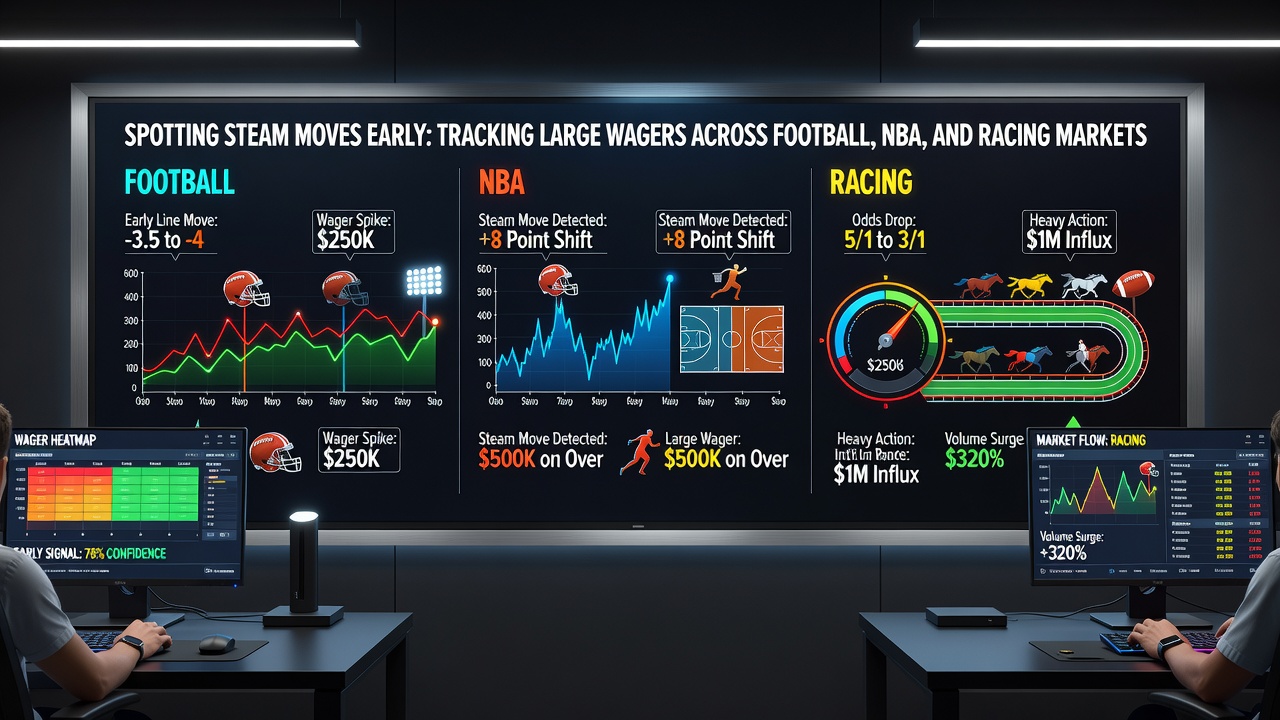
NBA steam frequently centers on player performance props because sharp groups possess detailed models that account for rest, travel, and matchup specifics not yet reflected in public lines. When large bets appear on a specific player's points or rebounds within a narrow window, books respond by adjusting related markets such as team totals and alternates. Racing adds another layer through late-money syndicates that focus on tote boards and pari-mutuel pools, where steam manifests as rapid shifts in odds for particular horses in the final minutes before the race. Industry analyses show that these late surges often correlate with trainer or jockey patterns that data-driven bettors identify earlier than the general public.
Cross-sport correlation tools have grown in popularity, allowing analysts to compare steam signals across football, basketball, and racing simultaneously. When similar timing and volume patterns appear in multiple sports on the same day, it can indicate broader market participation by professional groups rather than isolated sharp action. One study published by the University of Nevada, Las Vegas gaming research center found that multi-sport volume spikes correlated with higher accuracy in predicting final line movement compared to single-sport monitoring alone.
Tools and Data Sources for Observers
Modern tracking relies on a combination of public line history services, proprietary volume indicators from sportsbooks, and exchange data feeds. Regulatory filings from bodies such as the New Jersey Division of Gaming Enforcement provide aggregate handle figures that reveal broader trends, while academic papers on market efficiency help contextualize when steam is likely to persist versus reverse. Observers also cross-reference social sentiment and injury news feeds to filter out noise that might mimic steam without the underlying large-wager component.
Conclusion
Effective early detection of steam moves depends on integrating volume data, line velocity, and cross-market confirmation rather than relying on any single signal. As markets in football, NBA, and racing continue to expand, the ability to distinguish sharp action from public noise remains a core skill for those who follow betting lines closely. The patterns documented across seasons demonstrate that consistent monitoring of these indicators provides measurable edges in understanding where final lines are headed before the broader market adjusts.