Coaching Carousel Effects: Adjusting Forecasts After Managerial Shifts in Soccer and NBA
Quinn Friedrich · Jun 5, 2026
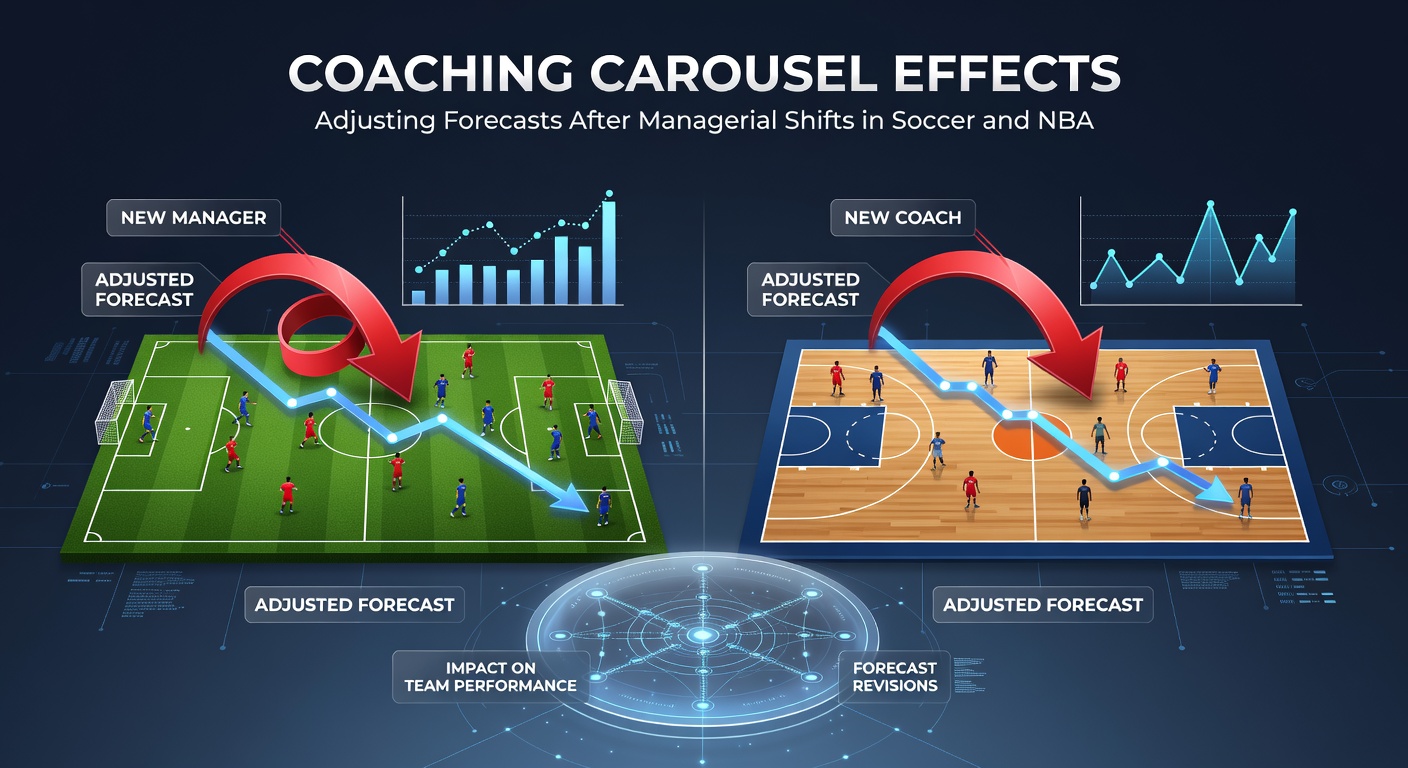
Coaching Carousel Effects: Adjusting Forecasts After Managerial Shifts in Soccer and NBA
Managerial turnover creates measurable ripples through team performance metrics in both soccer and the NBA, which forces forecasters and oddsmakers to recalibrate projections quickly. Data from multiple seasons shows that clubs and franchises replacing head coaches or managers experience short-term volatility in results, yet the duration and magnitude of those shifts differ sharply between the two sports. Analysts track these patterns through adjusted expected goal models in soccer alongside net rating calculations in basketball, where new leadership often resets rotation patterns and tactical priorities within weeks.Patterns in Soccer Leagues
European soccer competitions record dozens of managerial changes each campaign, with mid-season dismissals clustering around October and March windows. A study published by the Journal of Sports Economics examined over 400 dismissals across Europe's top five leagues and found that teams posting negative goal differentials in the prior 10 matches improved their points-per-game average by 0.28 in the subsequent 10 fixtures under new management. The uplift proved strongest in defensive organization, where clean-sheet percentages rose measurably while expected goals conceded declined.
Those gains fade once the initial tactical reset ends, typically after six to eight matches. Forecasters therefore weight early post-appointment results more heavily than later ones when building season-long projections. Betting markets reflect the same adjustment curve, with implied probabilities shifting upward immediately after announcements before stabilizing as performance data accumulates.
NBA Coaching Transitions and Performance Metrics
The NBA coaching carousel moves on a different timetable, with most changes occurring during the offseason although in-season firings still occur. Research from the National Bureau of Economic Research tracked 87 head-coaching changes between 2010 and 2025 and documented an average net-rating improvement of 2.8 points per 100 possessions in the first 20 games under new leadership. The effect concentrated among teams that ranked in the bottom quartile for defensive efficiency the prior season, where new schemes produced faster defensive realignment than offensive overhauls.
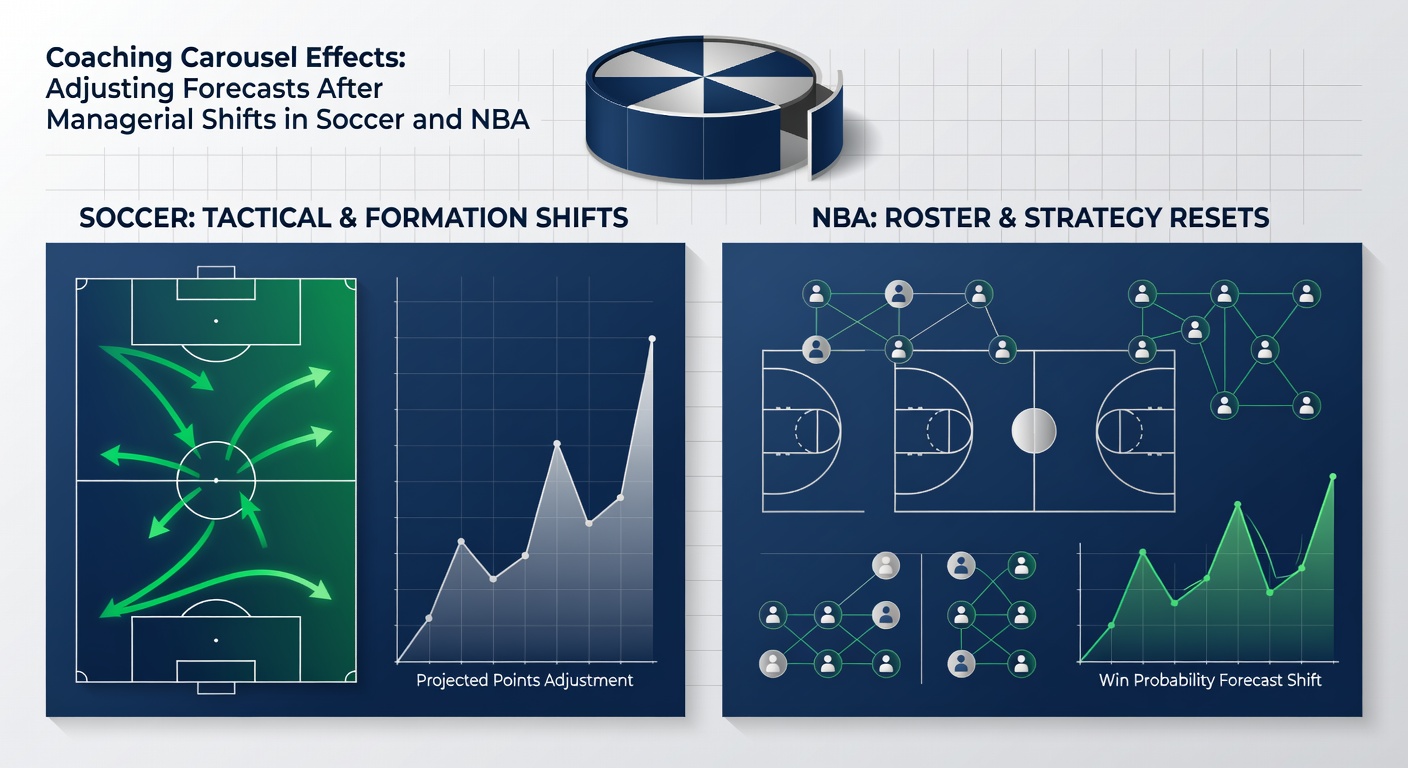
Playoff qualification rates also shift. Teams that fired coaches after the All-Star break improved their lottery odds avoidance rate by 11 percentage points compared with similar teams that retained their original staff. Projection models now incorporate a decay function that reduces teh new-coach premium after roughly 30 regular-season games, acknowledging that personnel constraints eventually reassert themselves.
Forecast Adjustments and Market Reactions
Oddsmakers monitor coaching announcements through dedicated models that blend historical performance deltas with roster continuity variables. In soccer, markets typically open new lines within 24 hours of a confirmed appointment, while NBA futures markets adjust more gradually because roster construction windows extend into the summer. Both sectors rely on regression-adjusted baselines that isolate managerial impact from underlying talent levels.
June 2026 data releases from European football federations and NBA front-office reports confirmed that interim coaches achieve lower stabilization rates than permanent appointments, prompting separate forecast tiers in updated simulations. Analysts therefore maintain parallel projection sets, one assuming continuity and another incorporating a mid-season leadership change probability derived from current standings and ownership statements.
Comparative League Dynamics
Soccer's points-based qualification systems reward consistency over longer stretches, which limits the lasting value of early managerial boosts. NBA playoff structures emphasize peak performance in shorter series, allowing teams to ride short-term tactical familiarity further into the postseason. These structural differences explain why soccer forecasters apply steeper decay rates to coaching effects while NBA models retain elevated expectations through the first round of playoffs.
Observers tracking both sports note that player acquisition windows interact directly with coaching changes. Soccer clubs often complete transfers before new managers arrive, whereas NBA front offices frequently align roster moves with incoming coaches. This sequencing alters the speed at which forecast models converge toward long-term means.
Conclusion
Managerial shifts in soccer and the NBA produce distinct, quantifiable effects on team outputs that forecasters must incorporate into updated simulations. Historical datasets reveal temporary performance lifts followed by regression toward talent-driven baselines, with timing and magnitude varying by sport and competitive structure. Markets respond by recalibrating probabilities, creating windows where accurate adjustment of coaching effects improves projection accuracy across both short-term and season-long horizons.