Camera Angle Illusions: How Visual Perspectives Shift Live Betting Decisions in Soccer, NBA, and ATP Events
Klara Simmons · Jul 20, 2026
Camera Angle Illusions: How Visual Perspectives Shift Live Betting Decisions in Soccer, NBA, and ATP Events
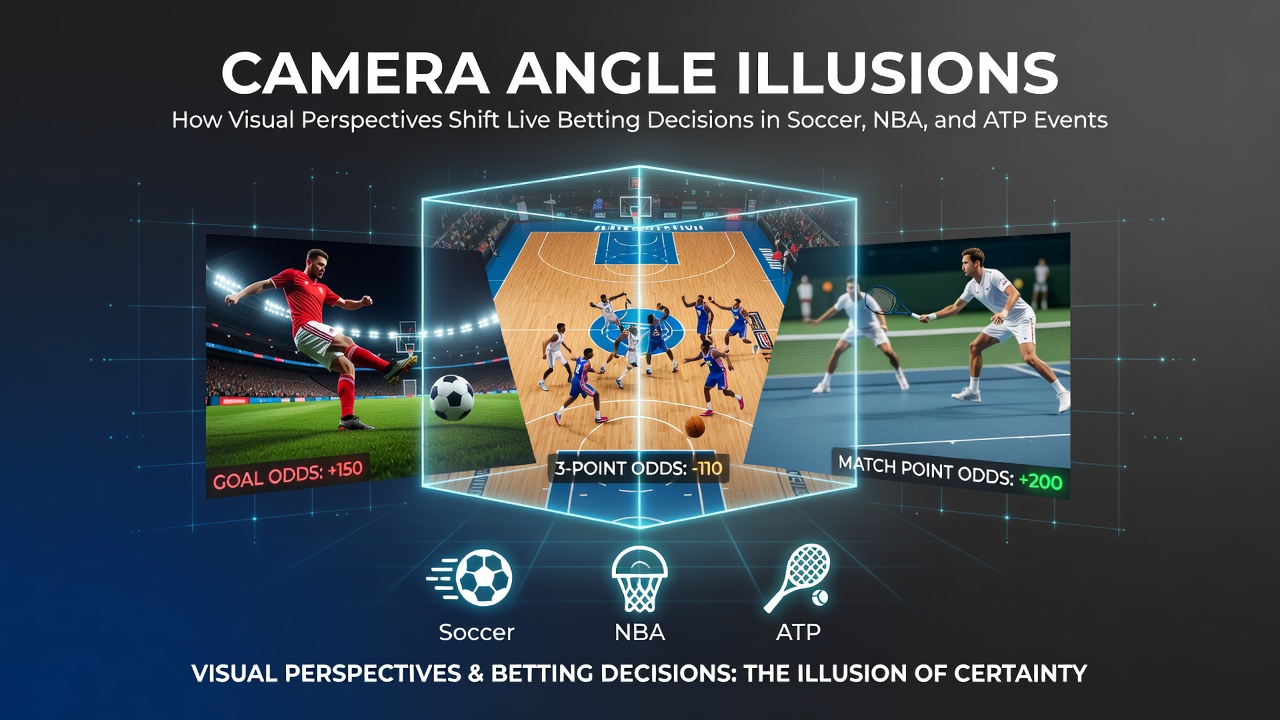
Live betting markets move fast when broadcast feeds present distorted views of plays, and camera angles play a direct role in shaping how bettors interpret action across soccer, NBA games, and ATP tennis matches. Production crews select shots that emphasize drama or clarity for viewers, yet those same choices alter perceived distances, contact severity, and ball trajectories in ways that prompt rapid wager adjustments during events.
Soccer Broadcast Angles and Foul Perception
Broadcasters in major soccer leagues often switch to tight sideline or overhead replays after challenges, and these frames compress space so that minimal contact appears more severe than it registers on the pitch itself. Bettors watching the feed may place live wagers on cards or penalty outcomes before the referee reviews multiple angles, and data from European match tracking services shows increased volume on over-card markets within seconds of such close-up shots. In July 2026 several top-flight fixtures demonstrated this pattern when wide-angle replays later revealed the original contact looked far less decisive than the initial tight frame suggested.
NBA Court Coverage and Shot Value Assessment
NBA productions frequently employ baseline and overhead cameras during fast breaks, and these perspectives flatten the court so that three-point attempts appear more open or contested than they are in reality. Live bettors adjusting player prop markets or quarter totals react to these visuals, with studies from sports media research groups indicating higher activity on made-three wagers after baseline angles that hide defensive help rotations. League tracking data reveals that when side-court shots dominate the broadcast for several possessions, betting volume on under totals rises even when actual spacing metrics remain unchanged.
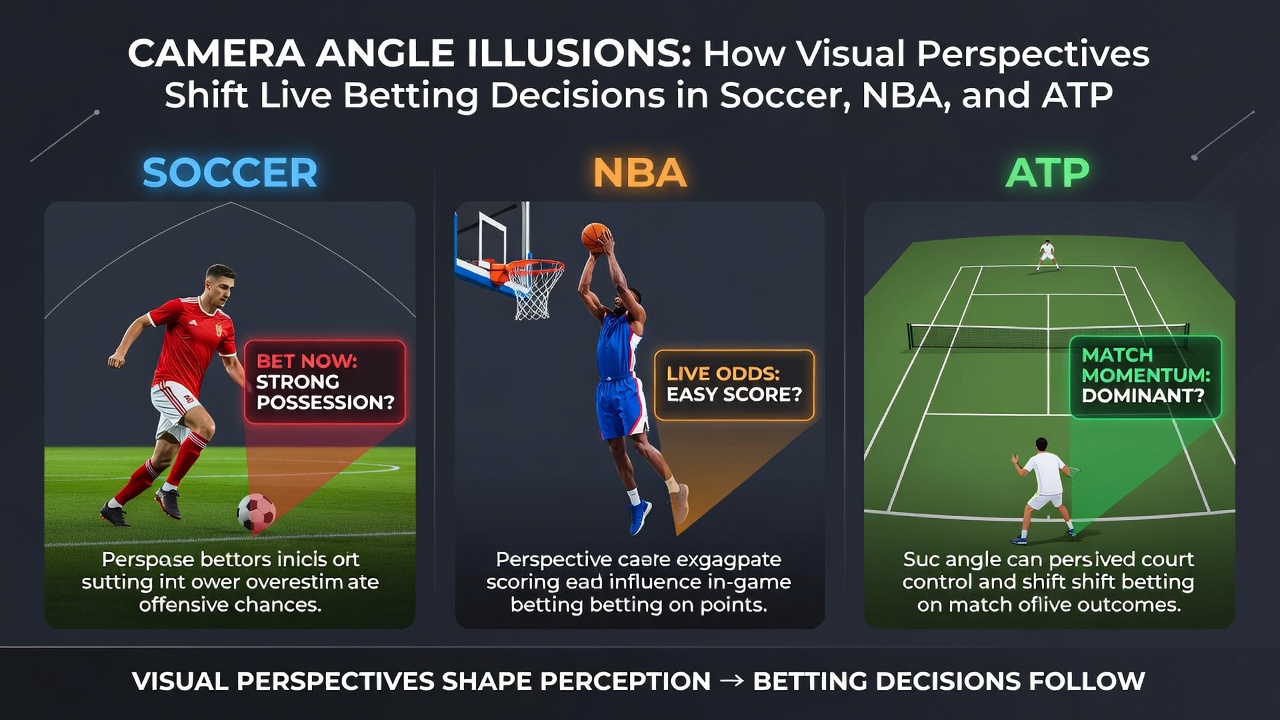
Production switches to low-angle shots near the rim further exaggerate verticality, prompting live wagers on blocks or charges that later reviews adjust. Observers note that these visual shifts occur most often during nationally televised games where directors prioritize dramatic framing over neutral coverage.
ATP Tennis and Line-Call Visual Distortions
Tennis broadcasts rely on hawk-eye graphics overlaid on standard camera feeds, yet the underlying angles still influence live bettors evaluating point-by-point markets during ATP events. Low-angle shots along the baseline make balls that land near lines appear clearly in or out until the graphic confirms otherwise, and researchers at academic institutions studying visual perception in sports have documented corresponding spikes in live set and game wagers immediately after such frames air. When overhead cameras dominate rallies, depth perception changes so that serves appear faster or slower relative to the actual radar readings released by tournament officials.
Regional gaming authorities in Australia and Canada have tracked these patterns through operator reports, noting that certain tournaments produce measurable differences in market timing when multiple camera angles compete for screen time. Bettors who rely solely on the primary broadcast feed without cross-checking data feeds often adjust positions on over/under point totals within the same game, and those adjustments cluster around moments when directors favor dramatic low or side angles.
Cross-Sport Patterns in Live Market Timing
Industry reports from North American gaming associations highlight that camera-driven perception shifts affect all three sports most strongly during high-stakes periods such as stoppage time in soccer, final minutes of NBA quarters, and tiebreaks in ATP matches. When production teams favor one angle for extended sequences, live odds adjust in response to increased betting volume rather than pure performance data, and this creates temporary inefficiencies that resolve only after wider replays appear. Those who monitor both broadcast feeds and official tracking metrics observe the lag between visual impression and statistical confirmation across different time zones and production crews.
Conclusion
Camera selection in soccer, NBA, and ATP broadcasts directly shapes the visual information available to live bettors, and the resulting perception changes influence market timing and volume even when underlying event data remains constant. Production choices that prioritize viewer engagement over neutral representation continue to drive these effects through July 2026 and beyond.