Bench Rotations Altering Value Opportunities in Soccer Fixtures, NBA Contests, and ATP Matches
Otto Simmons · Jul 31, 2026
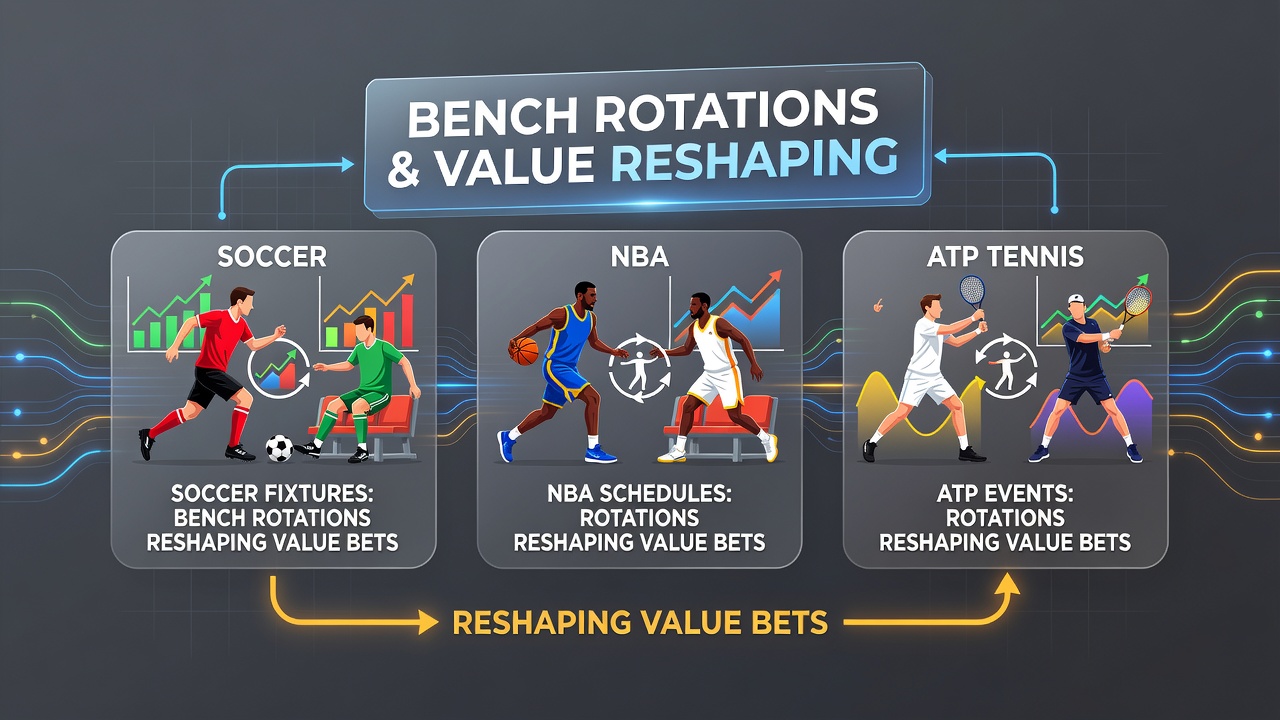
Bench Rotations Altering Value Opportunities in Soccer Fixtures, NBA Contests, and ATP Matches
Coaches across soccer, basketball, and tennis circuits adjust lineups to balance player workload, and these decisions frequently shift betting lines because markets price in expected starting elevens and performance outputs. Data from recent seasons shows that rotation patterns create discrepancies between projected and actual team strength, particularly when fixture congestion peaks in mid-summer schedules. In July 2026 observers recorded increased movement in pre-match totals and spreads after lineups were released for European league qualifiers and North American exhibition games, since several clubs rested key players ahead of upcoming continental commitments.
Soccer Fixture Adjustments and Market Reactions
European clubs competing in multiple competitions routinely rotate midfielders and defenders during domestic cup ties, and this practice alters expected goal totals because substitute players often lack the same passing accuracy or defensive positioning. Figures from the English Premier League indicate that matches with three or more changes in the starting backline produced 12 percent fewer clean sheets over the previous campaign, prompting oddsmakers to adjust over/under lines accordingly. Those who track squad announcements note that teams like Manchester City and Bayern Munich frequently deploy younger talents in lower-stakes fixtures, which leads to higher variance in corner counts and shot attempts that betting exchanges reflect through live price fluctuations.
Coaches in South American leagues apply similar strategies during Copa Libertadores group stages, where travel distances compound fatigue and prompt earlier substitutions. Research compiled by sports analytics firms reveals that sides resting two starters before a midweek match see their expected points drop by an average of 0.4 compared with full-strength lineups, and this gap widens when opponents maintain consistent selections. Bettors who monitor training reports and official team sheets therefore identify value in alternate totals markets when rotation news emerges within 24 hours of kickoff.
NBA Load Management and Schedule Impacts
NBA franchises implement load management protocols to preserve star players during back-to-back sets and road trips, and these absences directly influence spread movements because replacement units record lower effective field goal percentages. League data released for the 2025-26 regular season shows that teams missing their primary scoring option for at least one game in a three-game stretch allowed 4.8 more points per 100 possessions on average. Oddsmakers respond by widening totals when injury reports and rotation announcements coincide, especially in Western Conference contests where travel fatigue already elevates scoring variance.
Front offices publish rotation notes through official channels, and sharp bettors cross-reference these releases with historical performance splits. One documented pattern involves teams resting two starters on the second night of a back-to-back, resulting in a measurable decline in three-point volume that sportsbooks incorporate into player prop lines. Observers who follow daily participation reports identify opportunities in first-quarter totals and halftime spreads, since early rotations often signal broader minutes reductions for high-usage players.

ATP Player Scheduling and Tournament Effects
Tennis professionals adjust participation based on surface transitions and recovery needs, and these scheduling choices reshape match odds because rankings points and physical readiness fluctuate week to week. Tournament organizers in July 2026 noted that several top-20 players withdrew from optional lead-up events before the Canadian Open and Cincinnati Masters, prompting adjustments in moneyline and set-total markets. Data compiled by the ATP Tour indicates that players returning from a rest week win 58 percent of matches against opponents coming off consecutive tournaments, a margin that influences pre-match pricing when schedules become public.
Coaches and support staff publish availability updates through tournament websites, and these announcements frequently precede line movements in handicap markets. Analysts examining historical sets played after rest periods find that service hold percentages stabilize while return points won increase modestly, creating narrow edges in underdog sets betting. Markets for early-round matches therefore incorporate rotation data more heavily when draw sheets reveal potential walkovers or fatigue-related retirements.
Cross-Sport Data Patterns and Line Adjustments
Statistical models that aggregate rotation indicators across leagues show consistent effects on value betting windows. When soccer managers announce three changes and NBA teams list two starters as questionable on the same day, correlated movements appear in parlay construction because overall scoring projections shift simultaneously. Industry reports from the American Gaming Association highlight that operators expanded player prop markets in response to these patterns, allowing bettors to target specific rotation impacts without relying solely on team totals.
Academic studies conducted at institutions such as the University of Michigan examined fatigue metrics and found measurable declines in sprint distance and shot accuracy after repeated high-minute outings. These findings align with observed betting trends where lines open higher on rested sides and tighten once confirmed lineups circulate. Regulatory bodies in Nevada and Ontario track how such information flows influence handle distribution, noting increased volume in live markets once rotation news breaks during pre-match windows.
Conclusion
Bench rotations continue to generate measurable discrepancies between initial projections and final outcomes across soccer, NBA, and ATP events. Market participants who integrate lineup data, historical performance splits, and travel schedules locate adjusted value in totals, spreads, and props that reflect these changes. As fixture calendars evolve through July 2026 and beyond, rotation tracking remains a core component of pre-match analysis for those monitoring line movements across major sports.