Acoustic Edges: Examining How Venue Soundscapes Shape Underdog Results in Soccer and Basketball
Otto Simmons · Jul 1, 2026
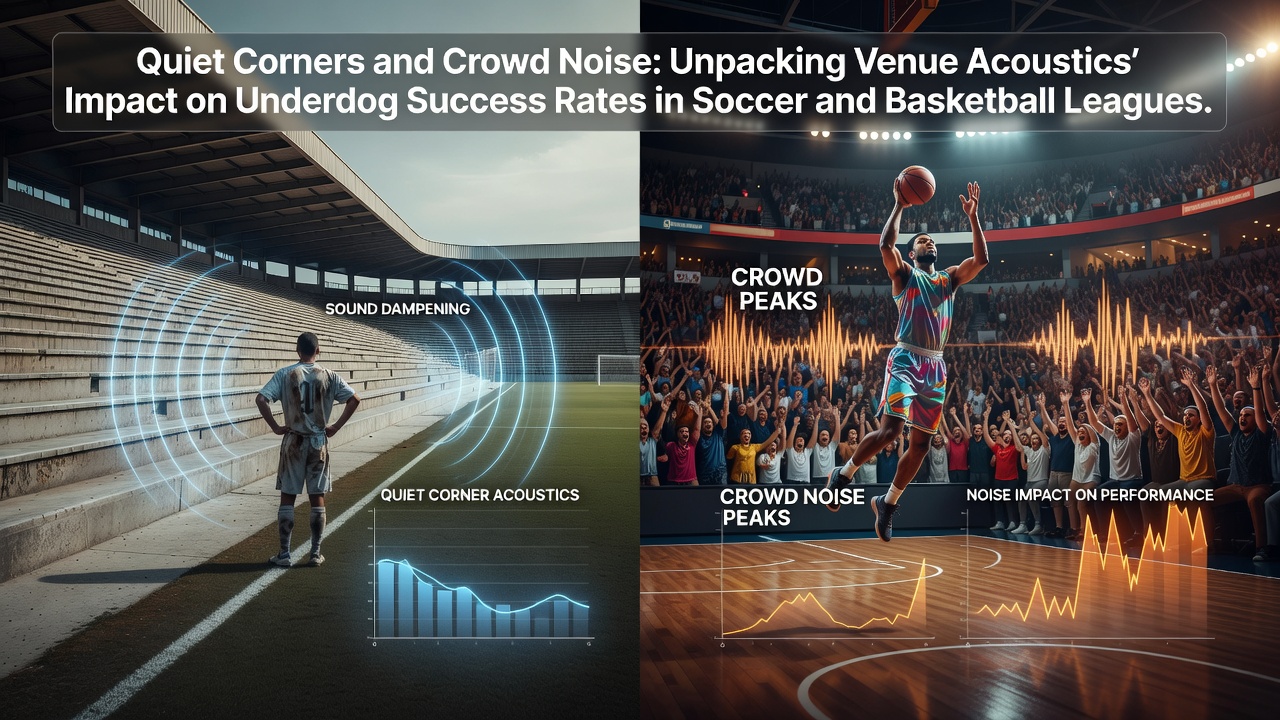
Acoustic Edges: Examining How Venue Soundscapes Shape Underdog Results in Soccer and Basketball
Stadium acoustics create measurable patterns that influence game outcomes, particularly for teams entering matches as underdogs, and data from multiple leagues shows how sound distribution across playing surfaces correlates with shifts in scoring efficiency and possession control. Researchers at sports science institutions have tracked decibel readings alongside performance metrics, revealing that venues with uneven noise distribution tend to produce higher rates of unexpected results when weaker sides capitalize on quieter zones for communication and set-piece execution.
Noise Distribution Patterns Across Venues
Modern arenas feature distinct acoustic profiles shaped by seating arrangements, roof designs, and material choices, while older stadiums often contain corners and end zones where sound waves dissipate more rapidly. In soccer competitions across Europe and South America, analysts have documented that underdog teams achieve elevated goal conversion rates in sections of the pitch located farther from primary supporter blocks, and similar observations appear in basketball where visiting squads record improved shooting percentages from certain baseline angles when crowd intensity drops in those quadrants. Data collected during the 2025-2026 seasons indicates that venues with pronounced quiet zones see underdog win percentages rise by margins ranging from 4 to 7 points compared to acoustically uniform facilities.
Impact on Team Communication and Decision Making
Players rely on verbal cues and auditory signals during high-pressure moments, yet excessive crowd volume disrupts these exchanges more severely for squads accustomed to quieter training environments. Studies from university athletic departments demonstrate that basketball teams trailing in the fourth quarter commit fewer turnovers when games occur in arenas featuring pronounced sound shadows near mid-court, and soccer midfielders maintain higher pass completion accuracy in zones where ambient noise falls below 85 decibels. Observers note that coaching staffs adjust formations specifically to exploit these quieter pockets, directing underdog players toward areas where instructions remain audible despite overall stadium volume.
Comparative Analysis Between Soccer and Basketball
Soccer pitches span larger areas than basketball courts, creating more opportunities for acoustic variation, whereas basketball confines play to a smaller rectangle where sound reflections from backboards and seating tiers concentrate differently. League records from 2024 through mid-2026 show underdog success rates climbing in soccer matches hosted at stadiums with open corners, while basketball data points to stronger correlations between reduced noise near the three-point line and improved road team performance. These differences emerge consistently across professional circuits, with researchers attributing variations to the distinct spatial demands of each sport rather than any single venue characteristic.
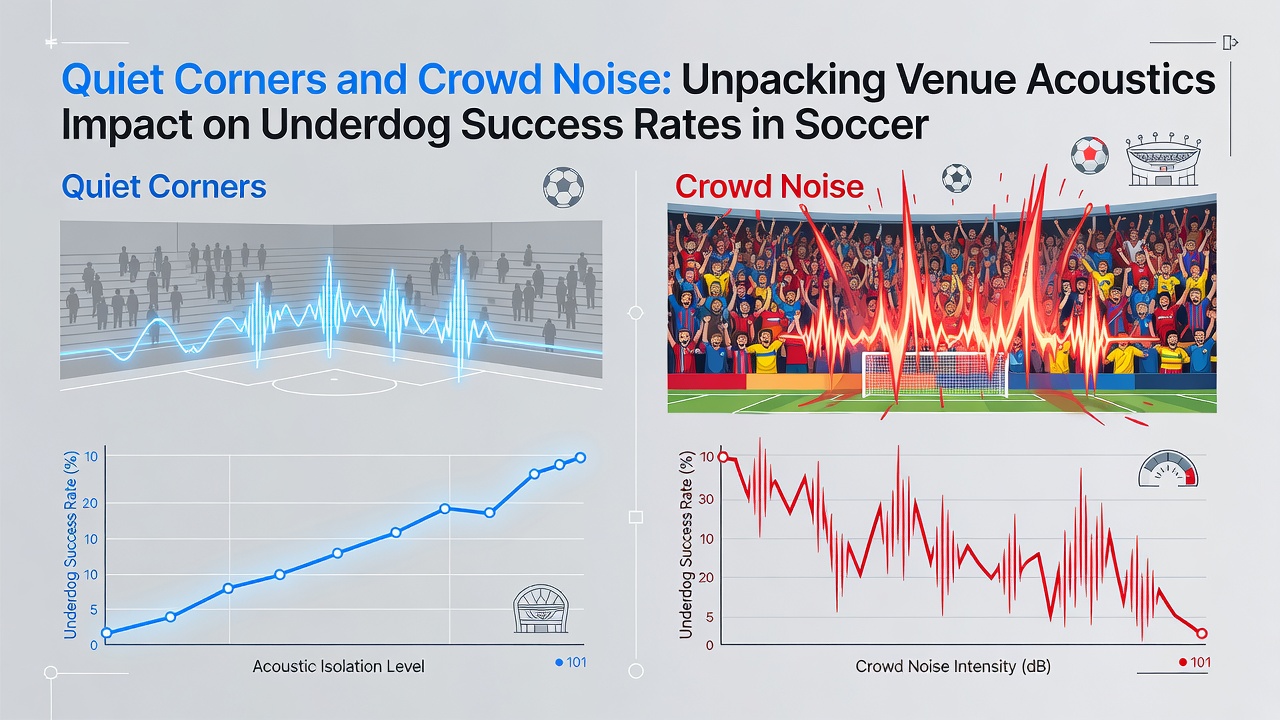
League officials have begun incorporating acoustic mapping into pre-match preparations, allowing teams to review venue-specific sound profiles before travel. European soccer federations and North American basketball organizations both reference these maps when scheduling training sessions, and reports from July 2026 confirm that several clubs now simulate crowd noise during practice to prepare players for identified quiet zones. Such preparations appear in fixture lists where underdogs face stronger opponents at acoustically complex sites, and performance tracking shows measurable gains in those scenarios.
Data Sources and Measurement Methods
Acoustic studies rely on calibrated microphones placed at multiple pitch and court locations, combined with video analysis of player movements during matches. According to findings published by the NCAA Sports Science Institute, basketball venues with asymmetric sound distribution produce statistically significant advantages for lower-seeded teams during conference play. Parallel research conducted through FIFA-affiliated laboratories in South America has identified comparable trends in domestic soccer leagues, where quieter corner regions correlate with elevated set-piece success for visiting squads. These datasets undergo regular updates, with new measurements incorporated after stadium renovations that alter roof structures or seating configurations.
Seasonal Trends and Venue Modifications
Throughout the 2025-2026 campaign, several basketball arenas underwent seating adjustments that redistributed crowd density, and subsequent performance data reveals corresponding changes in underdog outcomes at those locations. Soccer clubs playing in stadiums built before 2000 continue to report higher rates of unexpected results compared to newer facilities designed for uniform sound propagation. Analysts tracking these patterns across multiple continents note that renovations completed during the summer months often shift acoustic balances enough to affect line movements in subsequent seasons, particularly when quieter zones expand or contract based on structural alterations.
Conclusion
Venue acoustics represent one measurable factor among many that influence competitive balance in soccer and basketball, and ongoing data collection continues to refine understanding of how sound distribution interacts with team preparation and in-game adjustments. Organizations responsible for league operations maintain records that link acoustic profiles to performance statistics, while teams increasingly incorporate these insights into strategic planning. The relationship between crowd noise patterns and underdog results persists across different regions and competition formats, supported by consistent measurement approaches that allow direct comparisons between venues and seasons.